Why Early Play Shapes the Developing Brain
Your 1-year-old’s brain is working overtime. During this stage, millions of new neural connections form every second, laying the groundwork for everything from movement and language to focus and emotional regulation.
Research published in NPJ Science of Learning found that Montessori-style play environments boost motor coordination and sensory-motor integration—skills that support attention, coordination, and decision-making later in life. Simply put: when babies grasp, stack, and balance, they’re literally building their brains.
Montessori toys are uniquely suited for this kind of development. Unlike flashy, battery-operated toys that can overwhelm with sound and color, Montessori-inspired playthings are simple, tactile, and purpose-driven. They invite concentration instead of distraction and repetition instead of instant gratification.
What Science Says About How Montessori Toys Help 1-Year-Olds Learn
Sensory & Motor Development
Hands-on play strengthens neural pathways that connect touch, sight, and movement. Toys made from natural materials like wood and cotton offer rich textures that engage the senses while helping toddlers refine both fine and gross motor skills.
Cognitive Growth
Around 12 months, babies start grasping object permanence—the understanding that things exist even when unseen. Classic Montessori tools like object permanence boxes help strengthen this concept while encouraging patience and focus. Puzzles and stacking toys also introduce early problem-solving and spatial reasoning.
Focus & Executive Function
According to research from Brown University, Montessori-based play can improve working memory, cognitive flexibility, and impulse control. The simplicity of these toys allows children to practice sustained attention—an essential skill that supports learning readiness later on.
Emotional & Social Skills
Self-directed play encourages independence and confidence. When toddlers discover how to manipulate a toy on their own, they learn cause and effect (“When I push this, it rolls”) and build self-assurance through small wins.
Top Montessori Toys for 1-Year-Olds & What They Teach
- Vertical Stackers: Build hand-eye coordination, spatial awareness, and fine motor strength.
- Musical Instruments: Simple tools like tambourines or maracas teach rhythm and cause-effect understanding.
- Ball Runs & Ramp Racers: Demonstrate motion and gravity while strengthening crawling and tracking skills.
- Object Permanence Boxes: Reinforce cognitive development and focus through repetitive exploration.
- Wooden Ring Stackers & Puzzles: Foster problem-solving and dimension understanding through shape-fitting play.
- Push Toys & Sensory Balls: Support walking balance, leg strength, and sensory feedback.
Science consistently shows that these toys promote focused, purposeful play—key for brain and body development between ages 1 and 2.
What Parents Are Looking For: Durability & Design That Last
Parents are becoming more intentional with their toy choices. Trends show growing demand for eco-friendly, Montessori-style products that last years instead of months. The focus is shifting toward high-quality, versatile items that can evolve as children grow.
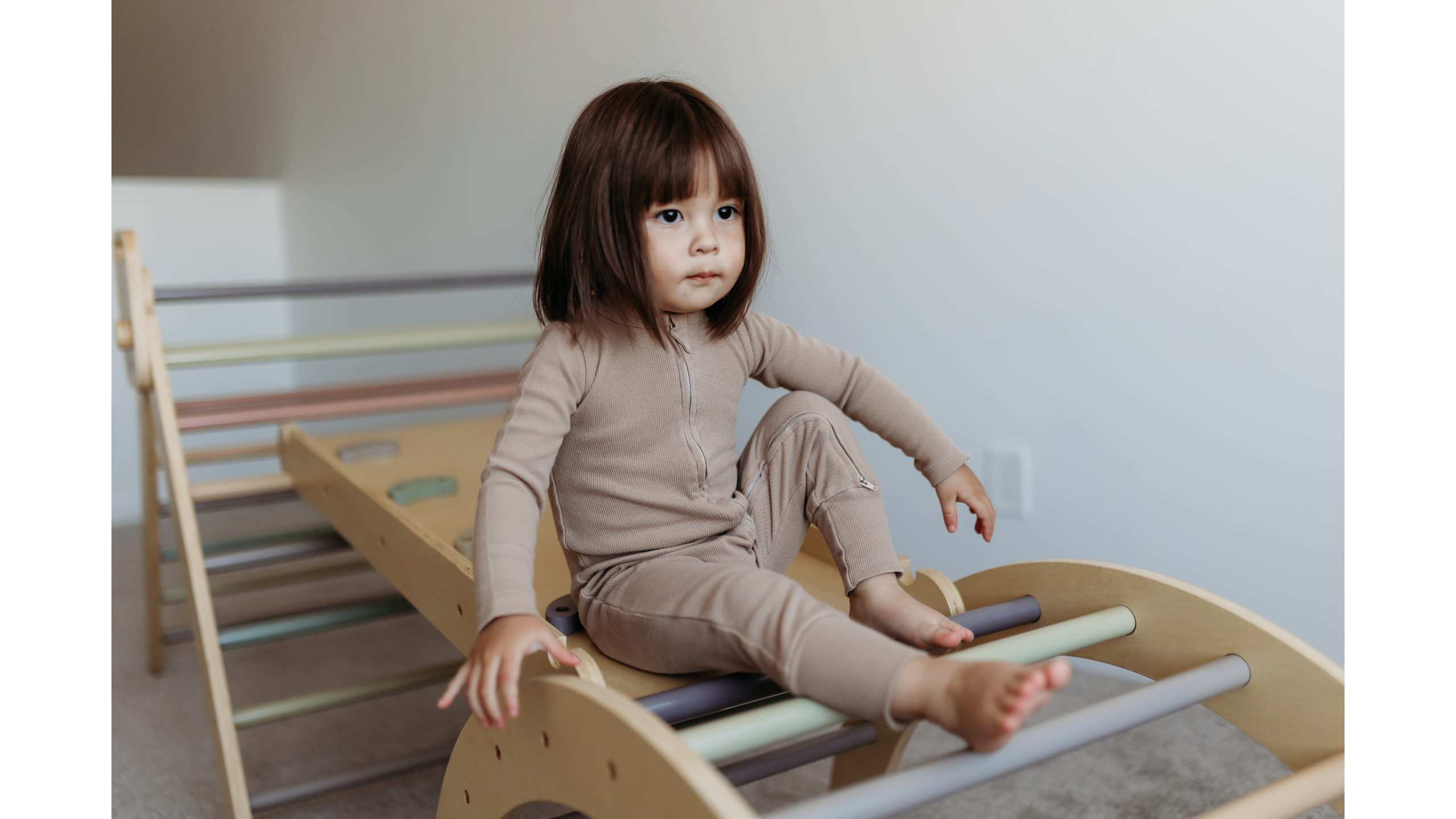
Experts from Alberta-based Epic Kidz Play Solutions say longevity and adaptability are crucial when choosing Montessori equipment. Their birch-wood climbing triangles, rocker climbers, and balance boards are designed to grow with a child—from early crawling stages to imaginative play in elementary years.
“Multi-age use is key,” explains co-founder Christina. “We wanted durable options that could be reimagined as our daughters got older.”
Many companies now emphasize open-ended movement and sensory exploration—principles that align closely with the Montessori approach to cognitive and motor development.
Creating a Home Play Space That Grows With Your Child
When choosing toys for your 1-year-old, look for materials and designs that invite discovery rather than dictate play. Choose simplicity over overstimulation, and prioritize natural textures over plastic. The goal is to encourage exploration, focus, and confidence, not constant novelty.
Your child’s curiosity is already the engine of learning—these tools simply give it room to climb.
If you’re exploring Montessori-inspired equipment built for real developmental growth, companies like Epic Kidz Play Solutions offer examples of how thoughtful design and science-backed play can come together.
Epic Kidz Play Solutions
hello@epickidzplay.com
+1 403 619 3980
Calgary
Calgary
Alberta
T2H 2A5
Canada